
Lamia Bazir was honored to be invited by the United Kingdom Government’s Foreign, Commonwealth & Development Office (FCDO) and the British Embassy to deliver remarks on girls’ education and women’s political inclusion at Winston House in the UK.
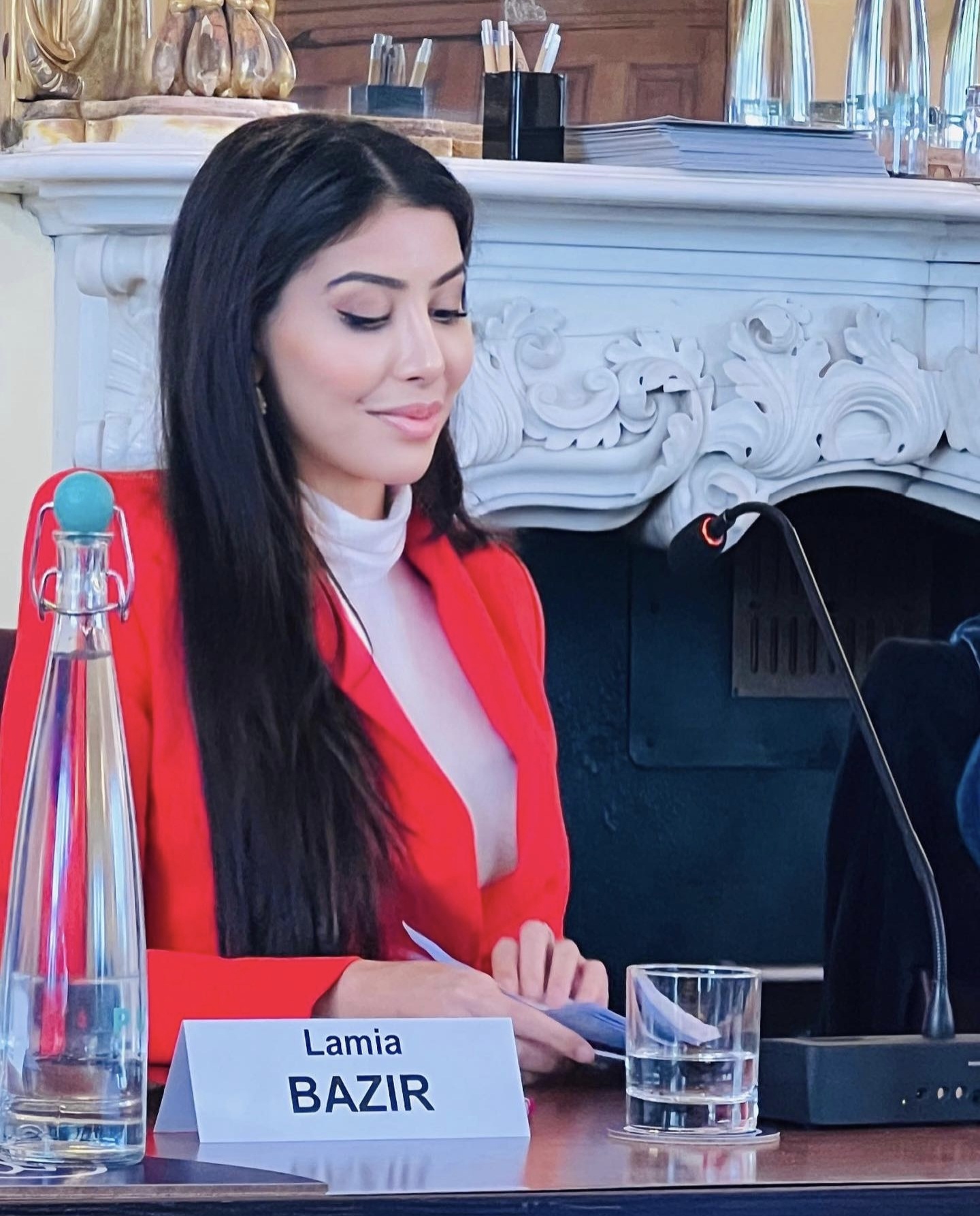
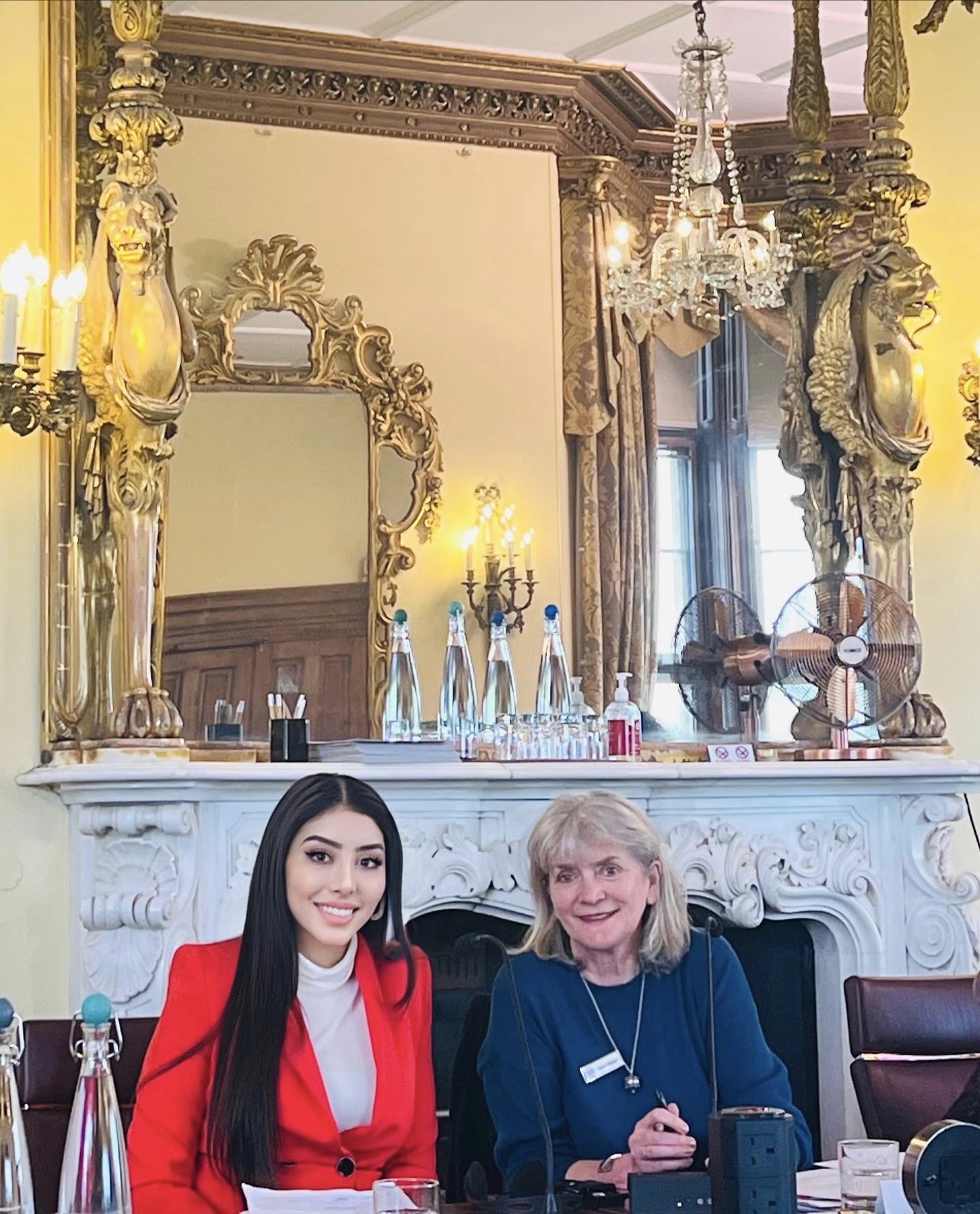
Below is an excerpt from her intervention, focusing on the case for and rationale behind investing in girls’ education.
The Case and Rationale for Girls’ Education
“Distinguished panelists, esteemed colleagues,
The empowerment of girls through education is not just a moral imperative—it is an economic, social, and political necessity. When girls are educated, communities thrive, economies grow, and institutions strengthen.
Yet, today, millions of girls worldwide (over 130 million girls) remain out of school, denied the tools they need to lead and participate fully in society.
The girl represents the fundamental agent to break or retain vicious cycles of poverty, inequality and exclusion. The girl should be the start and end of any public policy. I invite decision-makers, governments, civil society and international cooperation to focus on the girl, since it is the best approach to tackle most of our developmental issues from the origin through a preventive and proactive (rather than simply a corrective) approach, by targeting girls at an early age to build capacity and awareness and ingrain the seeds for progress.
When girls have access to quality education:
- They gain knowledge and information about their rights, the laws, national institutions, and accessible solutions.
- They build confidence and acquire critical thinking and decision-making skills.
- They are more likely to invest in their families and break the cycle of poverty. Every extra year of schooling for a girl increases her future earnings by up to 20%.
- They are better equipped to participate in civic and political life, becoming leaders and changemakers and inspiring future generations to follow in their footsteps.
A World Bank study found that every additional year of schooling increases the likelihood of women participating in civic activities by 10%.”
